
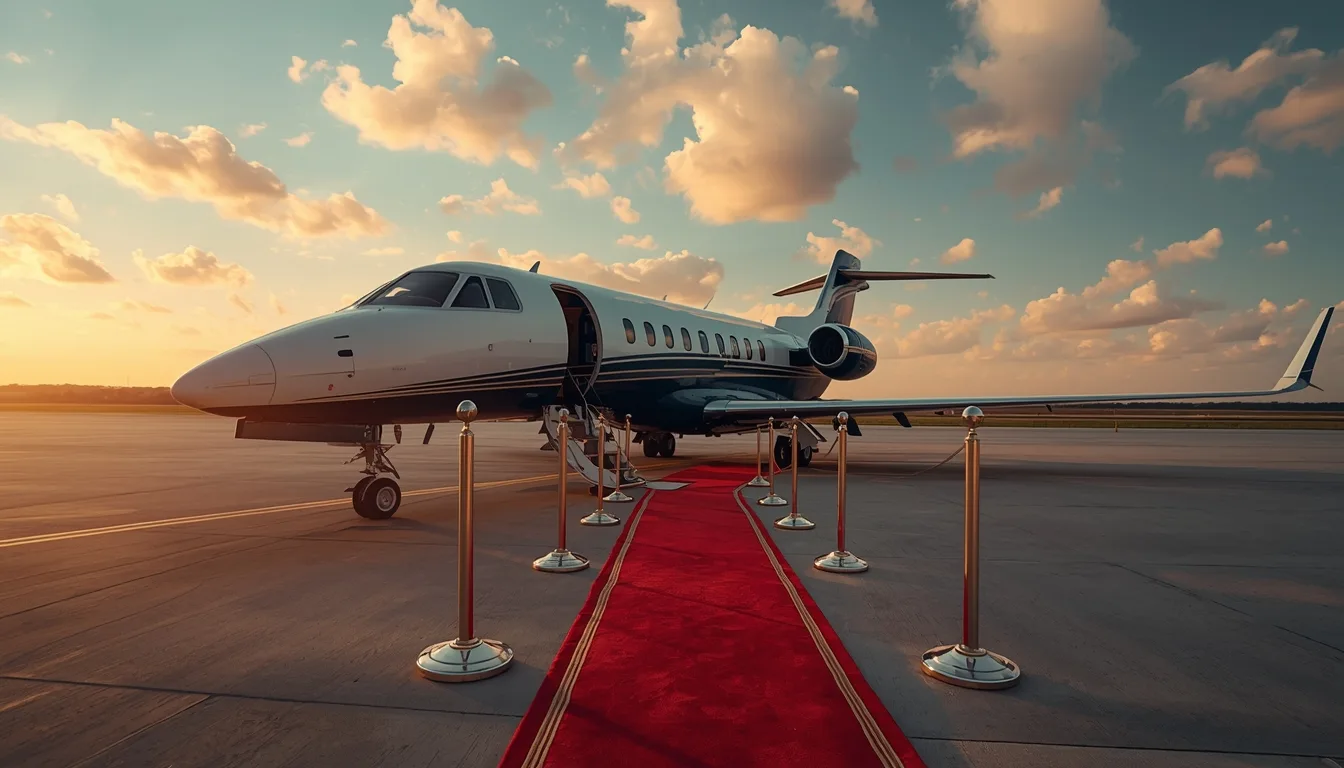
Flying private for the first time is one of those rare experiences that genuinely exceeds expectations. Even travelers who have flown first class on commercial airlines are struck by just how different the private aviation experience really is. From the moment you arrive at the airport to the moment you step off the aircraft, every element is designed around your comfort, your schedule, and your preferences.
Whether someone gifted you a flight, your company arranged it for a business trip, or you decided it was time to treat yourself, this guide covers everything you need to know so you can relax and enjoy the experience to the fullest.
Arriving at the FBO: Your Private Terminal
The first thing that surprises most first-time private flyers is that you will not set foot inside a commercial airport terminal. Instead, you will arrive at a Fixed Base Operator, commonly known as an FBO. Think of it as a private terminal exclusively for charter and private aviation passengers.
FBOs are typically located on the same airport property as the main commercial terminal but accessed through a separate entrance. At major airports like Van Nuys (VNY), the FBOs are on a completely separate facility. At others like Santa Monica (SMO) or Burbank (BUR), the FBO may be just a short drive from the main terminal.
When you arrive, you will pull your car directly up to the entrance. Many FBOs have complimentary valet parking, or you can arrange for a car service to drop you off. Walk inside and you will find a lounge that feels more like a high-end hotel lobby than an airport. Leather seating, complimentary refreshments, Wi-Fi, private meeting rooms, and often a concierge desk are standard amenities.
Your charter broker or the FBO staff will greet you and let you know when the aircraft is ready. In most cases, you will spend only a few minutes in the lounge before walking directly to your plane. There are no long corridors, no gates, and no jet bridges. You walk across the tarmac and up the aircraft stairs.
The Security Process (or Lack Thereof)
One of the biggest advantages of flying private is the dramatically simplified security process. There are no TSA lines, no removing shoes or belts, no taking out laptops, and no body scanners. Private aviation operates under different FAA regulations than commercial airlines.
That said, security is not entirely absent. Your charter operator and the FBO may verify your identity, and certain flights, particularly international ones, still require customs and immigration screening. For domestic flights within the United States, however, the process is remarkably streamlined. You show your ID to the FBO staff, and that is typically the extent of it.
This simplified process is one of the main reasons business travelers choose private aviation. The total time from pulling up in your car to being seated on the aircraft is usually 10 to 15 minutes. Compare that to the one to two hours recommended for commercial flights, and the time savings become significant, especially on shorter routes.
Boarding the Aircraft
When your crew signals that the aircraft is ready, an FBO staff member will walk you to the plane. You will step outside onto the ramp, the open tarmac area where private aircraft are parked, and walk directly to your jet. The pilots will typically be standing at the aircraft stairs to greet you personally.
Do not be surprised if the pilots introduce themselves by first name, shake your hand, and give you a brief overview of the flight. They will tell you the expected flight time, cruising altitude, weather conditions, and any turbulence you might encounter. This personal briefing is standard and one of the touches that makes private aviation feel so different from commercial travel.
You will then walk up the stairs and choose any seat you like. There is no assigned seating on private jets. On larger aircraft like super-midsize or heavy jets, you may have a full cabin with club seating that faces each other, a divan or couch, and even a separate bedroom suite on some long-range aircraft.
What to Expect Onboard
The cabin of a private jet is designed for comfort and productivity. Even on smaller light jets like the Citation CJ3 or Phenom 300, you will have leather seats that recline fully, ample legroom, and a quiet cabin. Noise levels on private jets are generally much lower than commercial aircraft because you are in a smaller, well-insulated cabin away from the engines.
Most modern charter aircraft offer Wi-Fi, though the quality varies. Light jets may have slower connections suitable for email and messaging, while heavy jets and ultra-long-range aircraft often have broadband-speed Wi-Fi capable of streaming video and video conferencing. Ask your broker about connectivity when booking if this is important to you.
Entertainment systems, power outlets, USB charging ports, and satellite phones are standard on most midsize and larger aircraft. On some jets, you will find a full entertainment system with screens at every seat. On others, especially light jets for shorter routes, the experience is more minimalist, but no less comfortable.
Temperature control is another perk. Unlike commercial aircraft, where the cabin temperature is a compromise for 200 passengers, on a private jet the crew will set it to your preference. If you are too warm or too cold, just let them know and they will adjust immediately.
Luggage on Private Jets
Luggage policies on private jets are far more flexible than commercial airlines, but there are still limits based on the aircraft type. Light jets typically accommodate 4 to 6 medium suitcases in the baggage compartment. Midsize jets can handle 6 to 8 bags, and heavy jets can carry even more, sometimes including oversized items like golf clubs, ski equipment, or surfboards.
The key difference is that your luggage goes directly from your car into the aircraft hold. No baggage claim carousels, no waiting for bags, and virtually zero risk of lost luggage. You hand your bags to the ground crew at the FBO, and they load them while you board. When you arrive at your destination, the bags are waiting for you at the aircraft or brought directly to your car.
One important note: there are no liquid restrictions for domestic private flights. You can bring full-size toiletries, bottles of wine, or anything else you would normally need to check on a commercial flight. For international flights, standard customs regulations still apply.
Catering and Refreshments
Catering is one of the most customizable aspects of flying private. On shorter flights of one to two hours, complimentary light refreshments are typically included. This usually means bottled water, soft drinks, coffee, and light snacks like nuts, fruit, or cheese plates.
For longer flights or special occasions, you can arrange custom catering in advance through your charter broker. Options range from gourmet boxed meals and charcuterie boards to full multi-course dinners prepared by local restaurants or specialty aviation caterers. Dietary restrictions and preferences are always accommodated. Whether you need vegan, kosher, gluten-free, or a specific cuisine, just let your broker know at least 48 hours before departure.
Alcohol is also available on private flights. Many operators stock the aircraft with wine, champagne, and spirits as part of the charter. If you have a specific preference, such as a particular vintage of champagne or a favorite whiskey, your broker can arrange to have it stocked on the aircraft for a modest additional charge.
Tipping Etiquette
Tipping on private jets is appreciated but never required. It is a common question among first-time flyers, so here is a straightforward guide.
For the flight crew, which includes the pilot and co-pilot, a tip of $100 to $200 per crew member is a generous and standard gesture for a domestic flight. For longer international flights or exceptional service, $200 to $500 per crew member is appropriate. You can hand the tip to the captain directly, or place it in an envelope addressed to the crew.
For the FBO ground staff who help with your luggage and car, $10 to $20 per person is a nice touch, similar to what you would tip a hotel bellman. If someone goes above and beyond, such as arranging a last-minute request or helping with special luggage, tipping more is always appreciated.
If your flight includes a dedicated flight attendant, which is common on larger aircraft, $100 to $200 is customary for a domestic flight. Remember that tipping is always at your discretion. The crew is paid for their service, and a sincere thank-you is always valued just as much.
How to Book Your First Private Jet Charter
Booking a private jet is simpler than most people expect. Working with a charter broker like Prestige Charter Group means you have a personal aviation advisor who handles every detail.
Start by sharing your travel details: departure city, destination, dates, number of passengers, and any special requirements. Your broker will then source the best aircraft options from vetted, licensed operators, present you with quotes, and walk you through the differences between aircraft types so you can choose the best fit for your trip.
Once you select an aircraft, the broker handles contracts, payment, catering arrangements, ground transportation coordination, and any other logistics. All you need to do is show up at the FBO at the agreed time, usually 15 to 20 minutes before departure.
One tip for first-time bookers: be flexible with your timing if possible. Flights during off-peak hours or midweek often come at lower rates. And ask about empty-leg flights, which are repositioning flights that operators offer at significant discounts, sometimes 50 to 75 percent off the standard charter rate.
Flying private is not just about luxury. It is about reclaiming your time, traveling on your own terms, and arriving relaxed rather than exhausted. Once you experience it, you will understand why so many travelers never go back to commercial.
Ready for Your First Private Flight?
Our team will walk you through every step, from selecting the right aircraft to arranging every detail of your trip. No question is too small.
Request a Quote